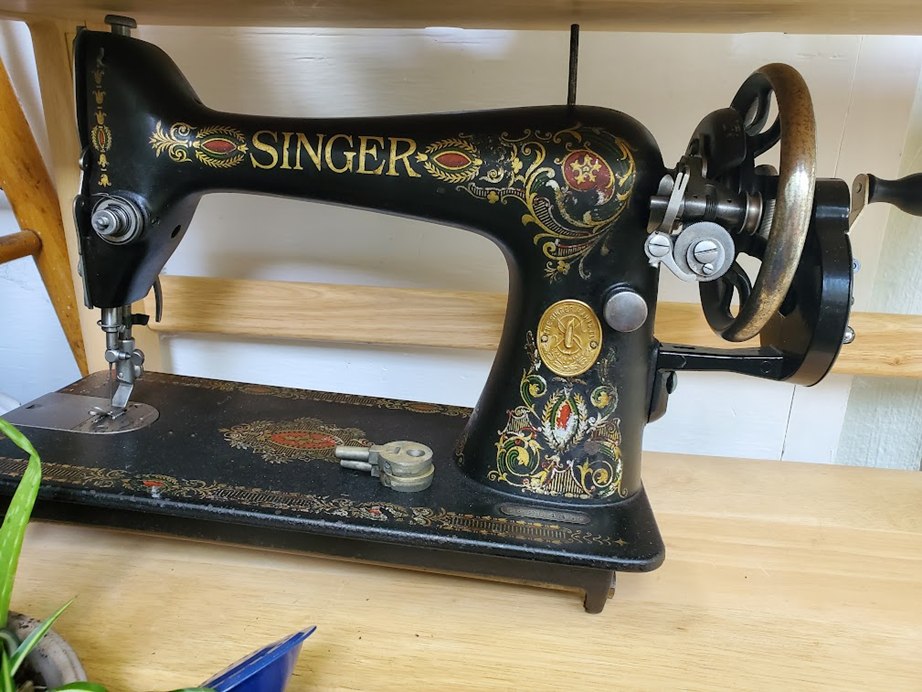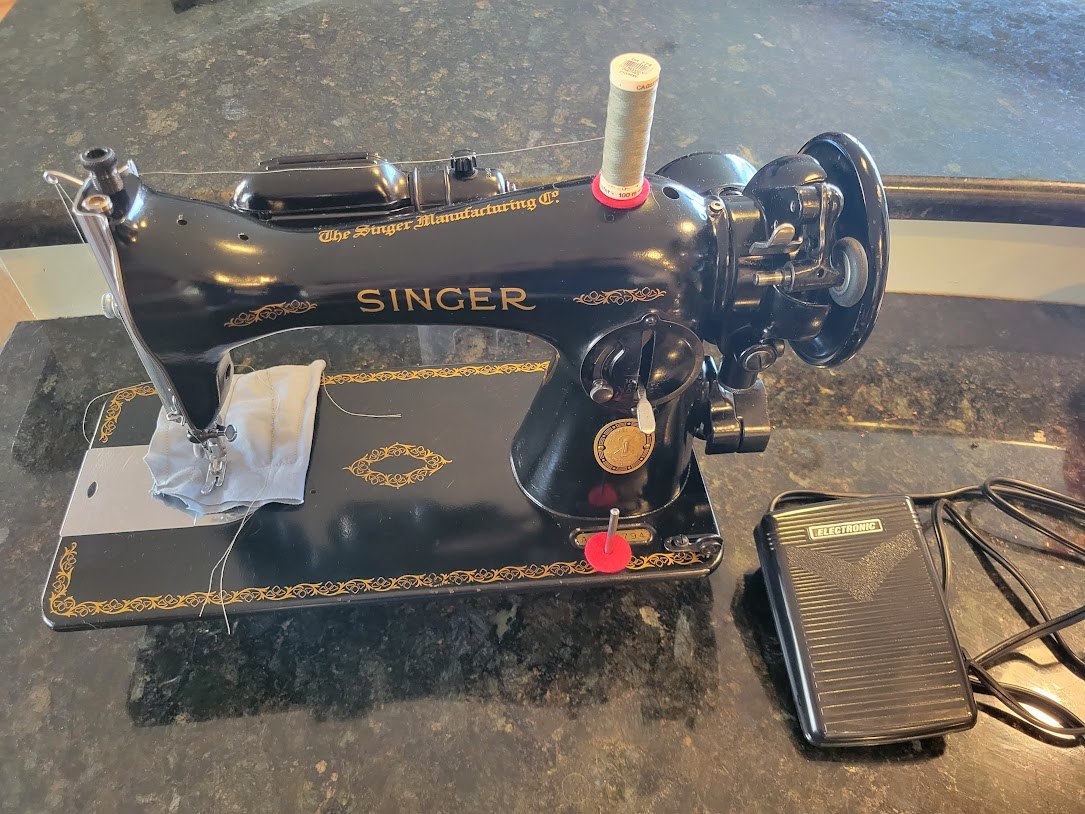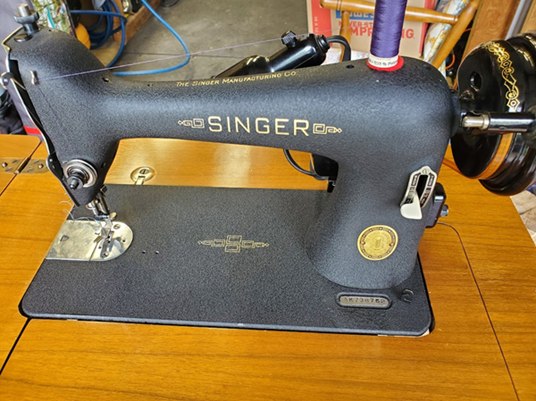
I love my vintage machines and sew on them almost exclusively. I also think we can appreciate them without repeating every claim that appears in a sales listing or a restoration video.
Some familiar lines contain a useful point. Others need a little context. Here are a few that make me pause—or laugh.
“The Perfect Stitch”
On the occasions when I use a modern machine, my first thought is not, “Wow, what awful stitch quality.”
A well-adjusted vintage straight-stitch machine can make a lovely seam. So can a good modern machine. Needle, thread, fabric, tension, and the condition of the machine all have a part to play.
A small needle opening can be helpful with delicate fabrics, but that feature is not exclusive to vintage machines. Some modern machines also accept a dedicated straight-stitch needle plate.
I often find modern machines fiddly and less satisfying to work on. That is a preference, though, rather than proof that they cannot sew a fine stitch. I like the feel, construction, and character of my old machines without needing every new one to be terrible.
“These Machines Aren’t Industrial!”
Correct: a domestic Singer does not become an industrial machine because it is heavy, black, and made of cast iron.
I would not advertise a Model 15 as an industrial machine or imply that it is a dedicated leather machine. Those descriptions can give a buyer the wrong idea about what it was designed to do.
But I am usually more interested in the buyer’s actual project than in arguing over the label. Someone saying “I need an industrial” may mean that they want a sturdy, straightforward machine for occasional heavier sewing.
A serviced vintage domestic may suit that person very well. Another job may call for a machine with a different feeding system, more clearance, or a needle-and-thread combination the domestic cannot accommodate.
That is why I recommend bringing a sample of the material and seam you intend to sew. Include the bulky intersections, lining, and other layers that will be part of the real project. Sewing that sample tells us more than either “industrial strength” or “only a domestic.”
“Only Use Sewing Machine Oil”
For routine lubrication, the machine’s requirements matter. For cleaning and freeing a neglected mechanism, oil is not the only tool available.
Coming from tool and small-engine repair, I am comfortable using appropriate cleaners, solvents, and abrasives where the job calls for them. Working through years of hardened oil using nothing but fresh sewing-machine oil takes more patience than I generally have.
The distinction is between cleaning something and lubricating it afterward. A cleaner or penetrating product is not automatically a suitable lubricant to leave in the machine.
The surface matters just as much. Bare metal, plating, paint, clear coating, and decals need different treatment. I choose the method for the particular part and its condition, rather than assume everything on an old machine can tolerate the same treatment.
My refurbishment overview explains the sequence. The detailed cleaning and lubrication articles will cover the individual methods.
“Eight Layers of Denim!”
This one always makes me smile. Eight layers of what denim?
A layer count leaves out the weight and stiffness of the fabric, the needle and thread, and whether the machine is sewing a flat stack or climbing over a bulky seam.
Getting a needle through a stack is only part of the job. I also want to know whether the machine feeds it consistently, forms a balanced stitch, and handles the transitions without a struggle.
A short demonstration can be useful, but it does not establish that a machine is suitable for every heavy project—or for repeating that operation all day.
Show me a representative seam and the stitching on both sides. That is much more useful than the layer count alone.
“Rare Machine”
Sometimes it is. Sometimes it is simply an old machine the seller has not seen before.
Age, rarity, condition, and usefulness are separate questions. An unfamiliar-looking machine is a reason to investigate, rather than proof that it is scarce.
A particular variant, finish, attachment, or original combination of machine and cabinet may be more unusual than the basic model. That is where an exact identification and some research become useful.
I want to know what is supposed to be rare and what evidence supports the claim. The Singer history section will explore model identification and production records, including what those records can—and cannot—tell us.
A common machine can still be beautifully made, enjoyable to use, and well worth preserving. It does not need to be rare to deserve a place on the sewing table.
Have a machine or a question to share?
Get in touch with Duncan ↗